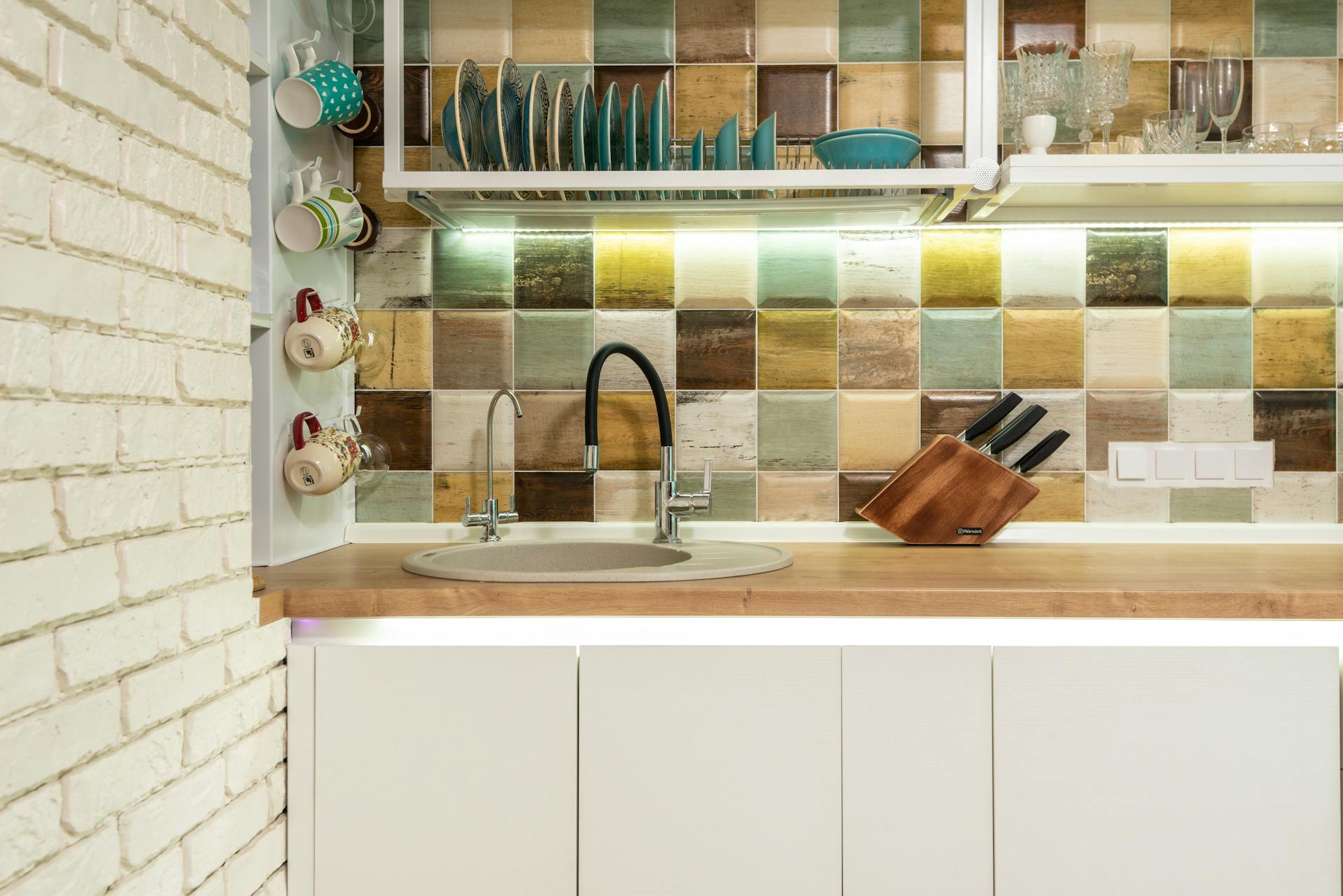
Tile-cutting skills are unnecessary if you want to change your kitchen. You can install a peel-and-stick backsplash in one weekend for a small fraction of what a tile job will cost. These new adhesive tiles are surprisingly realistic to look at and remain firmly in place for years with the right technique.
We’ve all gazed at bare walls behind our countertops, dreaming of costly renovations. Wise homeowners have a secret: peel-and-stick technology gives you pro-looking results.
What You’ll Be Doing and How Much It Costs
Your peel-and-stick backsplash installation requires minimal tools and little capital. A square foot of decent tiles should cost you between $3 and $8, so a typical kitchen would be $150-400 total. That’s roughly 70% less than the pro version.
Required tools are a smoothing tool, a level, a tape measure, and a utility knife. You will also need painter’s tape for clean cuts, lint-free cloths, and degreasing cleaner. If you can cut and measure straight lines, you can do this project.
Buy 10% more tiles for waste and repairs in the future. Quality matters; cheap alternatives will not stick properly or eventually peel off.
Preparation: The Make-or-Break Step
Good wall preparation is the key to success. Degrease your surface good and hard—any grease or residue will prevent good adhesion. Remove outlet covers and switch plates, and then sand glossy paint lightly to offer a better grip.
Mark your starting point carefully. Measure out your space and set out planning not to have thin strips along borders. Work from the center outwards for symmetrical edges on both sides.
Read More: Timeless vs. Trendy: What Stays in Style Longest?
Installation: Taking Your Time Pays Off
Begin with your bottom row, using an even line as your guide. Peel off only a few inches of back-up paper at a time; this leaves you able to place the tile exactly before full adhesion. Having been placed, peel more back progressively, while flattening with hard, even pressure.
Work slowly and deliberately. Unlike regular tile, peel-and-stick varieties do not offer repositioning time when they contact. Use your smoothing tool to eliminate air bubbles by starting in the center and working outwards.
To make corner or outlet cuts, measure twice and cut with a sharp utility knife. Score the surface a few times rather than cutting through in one pass. Clean cuts are professional and prevent peeling.
Read More: 10 Small Changes That Make a BIG Impact on Your Living Room
Common Mistakes That Ruin Results
The largest error? Haste in the cleaning process. Grease, dust, or water makes tiles fail within a matter of months. Spend extra time making your surface entirely clean and dry.
Don’t pull or stretch tiles during installation; this makes them shrink afterwards, causing gaps or lifted edges. Glue them flat and level without stretching. Temperature does too: set up when your kitchen is 65-75°F for best adhesion.
Don’t leave gaps or overlap the tiles. Butt joints should be close-fitting, but not constrained. Constrained piecing together creates stress points, leading to future lifting.
Rules for Making It Last
Your peel-and-stick backsplash will be gorgeous for decades if cared for. Gently clean with soap and water, and never use harsh cleaners that will destroy the finish. When edges start to curl, warm the adhesive with a hair dryer and clamp them back into place.
The brilliance of this update is that it’s so easy and effortless. You’ll restore your kitchen appearance in a weekend, boost your home value, and be confident to tackle bigger renovations. Design your design today—your kitchen renovation is just on the following weekend.
Read More: How to Make a Small Space Feel Bigger